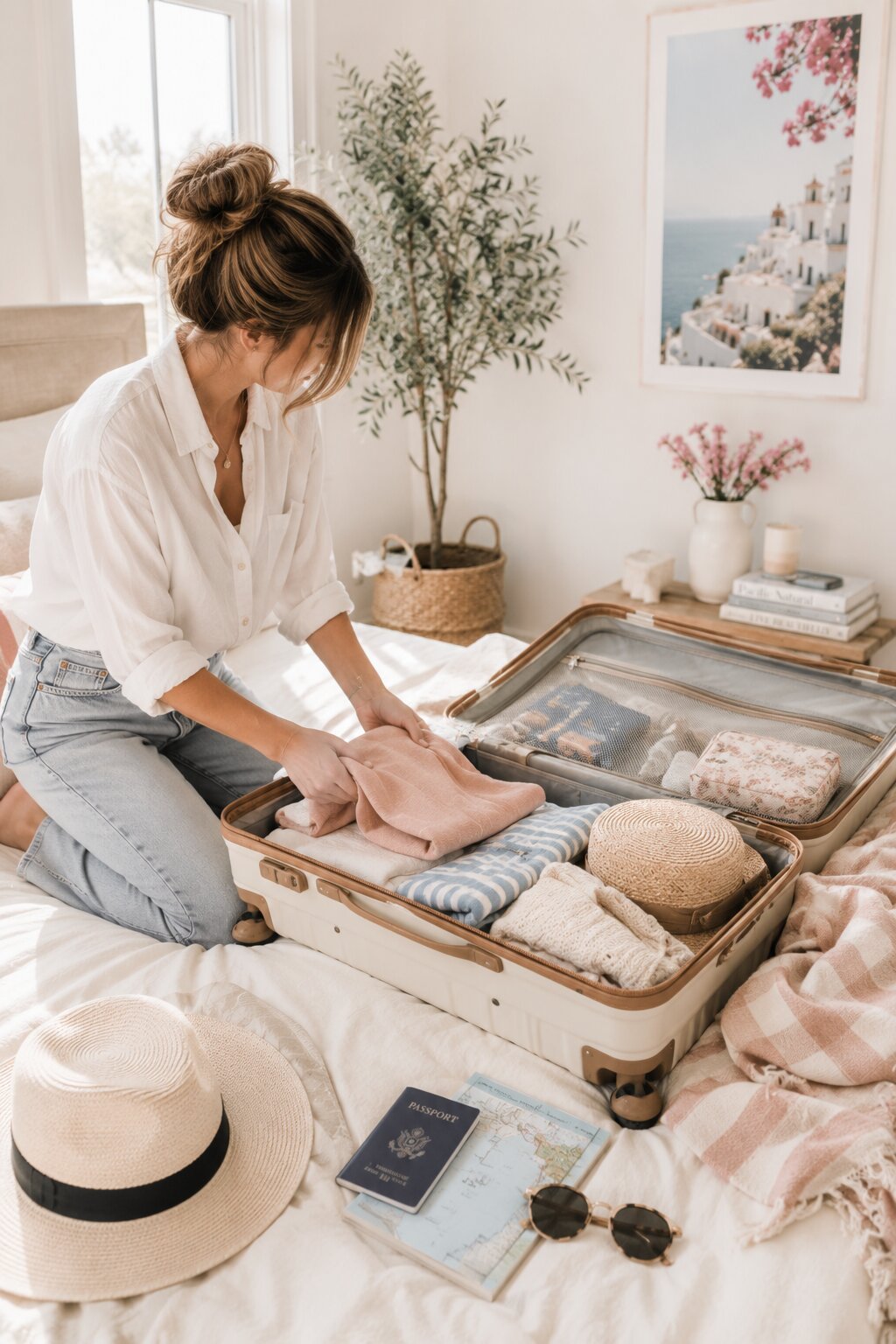
Packing for a month-long trip feels like it should require more luggage than a weekend getaway, but it doesn’t. In fact, seasoned long-term travelers will tell you the opposite is true: the longer the trip, the lighter you should pack. Fewer items mean fewer decisions, less stress, and more freedom to move through airports, train stations, and cobblestone streets without wrestling an oversized suitcase.
This guide breaks down exactly how to pack light for a month-long trip, no matter where you’re headed, from the right luggage to choose from to the clothing formula that actually works to the mindset shift that makes minimalist packing possible.
Why Packing Light Matters for Long Trips
Before diving into the how, it’s worth understanding the why. Packing light isn’t just about avoiding a sore shoulder.
Mobility. A month-long trip usually means multiple destinations. Every time you switch cities, hop on a train, or catch a budget flight, you’ll be grateful you’re not lugging a 50-pound suitcase up three flights of stairs.
Flexibility. Light packers can say yes to spontaneous plans, an overnight hike, a last-minute flight change, a walk instead of a taxi, because their luggage doesn’t dictate their decisions.
Cost savings. Budget airlines charge for checked bags, and oversized luggage often means extra fees. Packing light can save you real money over the course of a month of travel.
Laundry becomes your friend, not your enemy. With less clothing, you’ll do laundry more often, but this is actually a hidden advantage, since it means less to carry and cleaner clothes overall.
Step 1: Choose the Right Luggage
Your packing strategy starts before you pack a single item; it starts with your bag.
Backpack vs. Suitcase
For a month-long trip, a carry-on-sized backpack (40-50 liters) is often the best choice. It keeps your hands free, fits into overhead bins, and forces natural size constraints that prevent overpacking.
If you prefer wheels, a carry-on suitcase (roughly 21-22 inches) works well too, especially if you’ll mostly be in cities with paved roads and elevators.
The golden rule: if it doesn’t fit as a carry-on, it’s too much for a month. This single constraint solves 80% of the “what should I pack” problem before you even start.
Packing Cubes Are Non-Negotiable
Packing cubes compress clothing, organize categories (tops, bottoms, underwear, accessories), and make it easy to live out of a bag without turning it into a disaster zone every morning. They’re one of the cheapest, highest-impact purchases you can make for long-term travel.
Step 2: Adopt the Capsule Wardrobe Mindset
The single biggest shift for packing light is thinking in terms of a capsule wardrobe, a small set of interchangeable pieces that mix and match.
The 5-4-3-2-1 Clothing Formula
A reliable formula for a month-long trip looks like this:
- 5 tops (t-shirts or lightweight shirts)
- 4 bottoms (pants, shorts, or a skirt)
- 3 mid-layers (a light sweater, cardigan, or flannel)
- 2 pairs of shoes (one comfortable walking shoe, one versatile second option)
- 1 outer layer (a jacket appropriate for your destination’s climate)
This gives you dozens of outfit combinations from under 15 items, and it works whether you’re traveling for a week or a month; the packing list barely changes because you’ll simply do laundry more often on longer trips.
Choose Fabrics Strategically
Not all clothing is created equal for travel. Prioritize:
- Merino wool – naturally odor-resistant, so you can wear it multiple times between washes
- Quick-dry synthetics – ideal for sink-washing and hotel-room drying
- Wrinkle-resistant fabrics – so you look put-together straight out of your bag
Avoid heavy cotton and anything that takes forever to dry. These fabrics add weight and become a liability if you need to wash clothes in a hotel sink.
Stick to One Color Palette
Pack clothing in a single coordinated color scheme; think neutrals like black, navy, gray, and olive, with one or two accent colors. This way, everything pairs with everything else, and you’ll never end up with items that only work with one specific outfit.
Step 3: Master the Toiletries and Electronics Balance
Toiletries: Buy, Don’t Bring
For a month-long trip, you rarely need to bring full-sized toiletries. Instead:
- Pack travel-sized containers (under 3.4 oz for carry-on compliance) and refill as needed
- Buy shampoo, sunscreen, and other bulky items at your destination rather than carrying a month’s supply
- Consider solid toiletries, shampoo bars, solid deodorant, and toothpaste tablets, which are lightweight, leak-proof, and TSA-friendly
Electronics: Bring Less Than You Think
A common overpacking trap is electronics. For most month-long trips, you need:
- Phone + charger
- One universal travel adapter (skip multiple adapters; one universal one covers you everywhere)
- A portable power bank
- Headphones
- A lightweight camera, only if photography is a priority (your phone may be enough)
Skip the laptop unless you’re working remotely; it’s often the heaviest, bulkiest item in a traveler’s bag and rarely gets used as much as expected.
Step 4: Pack Multi-Use Items Only
Every item in your bag should ideally serve more than one purpose. Before packing anything, ask: “Can this do double duty?”
Examples of smart multi-use packing:
- A sarong or large scarf that works as a beach towel, blanket, or modest cover-up for temples and religious sites
- A packable rain jacket that doubles as a windbreaker
- Leggings that work for both workouts and sleep
- A cross-body bag that serves as your daily carry and your “important documents” bag
If an item only solves one very specific problem, it’s usually a candidate to leave behind.
Step 5: Plan for Laundry, Not for Abundance
The mental shift that unlocks light packing for long trips is this: you’re not packing for 30 days; you’re packing a wardrobe you’ll wash and rewear.
- Research laundry options at your destinations before you go; many hostels, Airbnbs, and even budget hotels offer laundry service or machines
- Pack a small travel-sized detergent packet or bar for sink washing in a pinch
- A travel clothesline (a thin elastic cord with hooks) is lightweight and lets you dry clothes in hotel rooms
Once you accept that laundry is part of the trip, you stop trying to pack “just in case” outfits for every possible scenario.
Step 6: Use the “Lay It All Out, Then Cut It” Method
Before you zip up your bag, try this proven trick:
- Lay out everything you think you want to bring on your bed
- Remove one-third of it. This is the step most people skip, and it’s the most important one
- Pack what’s left, then wear the bulkiest item (like boots or a jacket) on your travel day instead of packing it
This method works because most people’s instinct is to overpack “just in case,” and physically seeing the pile makes it easier to cut the excess.
Step 7: Don’t Forget Documents and Backup Essentials
Light packing doesn’t mean skipping the essentials. Keep these organized in one easily accessible pouch:
- Passport and copies (physical and digital/cloud-saved)
- Travel insurance details
- A backup debit/credit card stored separately from your primary card
- A small first-aid kit with basics (pain relievers, band-aids, any prescription medication)
These items are small, light, and non-negotiable; they don’t count against your “less is more” goal because they’re essential, not excess.
Sample Packing List for a Month-Long Trip
To bring it all together, here’s a complete sample list:
Clothing
- 5 t-shirts/tops
- 4 bottoms (pants, shorts, skirt)
- 3 mid-layers
- 1 jacket
- 7 pairs of underwear
- 3 pairs of socks
- 2 pairs of shoes
Toiletries
- Solid shampoo/conditioner bar
- Travel-sized sunscreen
- Toothbrush + toothpaste tablets
- Solid deodorant
- Small first-aid kit
Electronics
- Phone + charger
- Universal adapter
- Power bank
- Headphones
Extras
- Packing cubes
- Sarong/scarf
- Packable rain jacket
- Travel clothesline + detergent
- Document pouch (passport, cards, insurance)
Final Thoughts: Less Really Is More
Packing light for a month-long trip isn’t about deprivation; it’s about designing a wardrobe and kit that works for you instead of weighing you down. Once you experience the freedom of moving through a new country with just a carry-on, it’s hard to imagine traveling any other way.
The next time you’re prepping for a long trip, resist the urge to pack “just in case.” Trust the capsule wardrobe, embrace laundry day, and let your bag be light enough to carry a smile instead of a strain.