

48 Hours in Lisbon: The Insider’s Bespoke Itinerary
Lisbon rewards travelers who look past the miradouros and tram routes that fill every guidebook. Beneath the postcard version of the city is a quieter one: tile ateliers that have supplied the same families for generations, port houses whose cellars hold vintages dating back further than most European monarchies, and a coastline that empties out entirely once you know where the day-trippers don’t go.
This is the third installment in our Bespoke 48 Hours series, following Venice and Vienna. Lisbon is a city of craft and slow accumulation rather than grand gestures, and the version of it worth experiencing is arranged quietly, in advance, through people who’ve spent years earning access to it.
Where You Stay Sets the Terms of the Trip
Four Seasons Hotel Ritz Lisbon remains the city’s most established address, with a concierge network that reaches deep into Lisbon’s ports, ateliers, and private clubs, useful when arranging same-week access that would otherwise take months.
Palácio Belmonte, built into a fifteenth-century palace within the walls of São Jorge Castle, offers a smaller, more intimate stay across a series of individually designed suites, several with private views over the Alfama rooftops down to the Tagus. Its scale makes it ideal for travelers who want the city’s history built directly into their accommodation rather than viewed from a hotel window.
Bairro Alto Hotel, smaller and more design-focused, sits at the edge of the neighborhood of the same name and offers a rooftop terrace that quietly rivals any view in the city, along with a team well-versed in arranging private experiences across the historic center.
Reach out to your hotel’s guest experience team or a Lisbon-based travel advisor at least six weeks ahead. The city’s private tile ateliers and historic port house cellars, in particular, operate on relationships built over years, not standard booking calendars.
Day One: Morning — Alfama Before the Trams Start Running
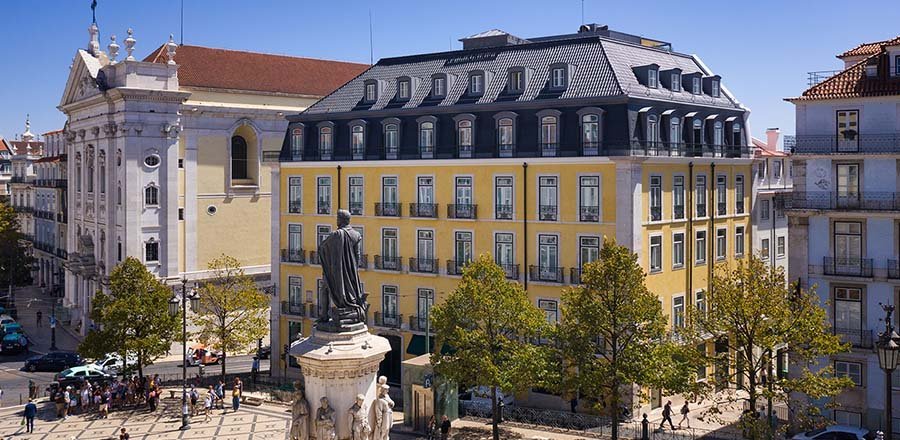
Lisbon’s oldest quarter, Alfama, is best experienced in the hour before the tourist trams begin their loops. Arrange a private, early-morning walking tour of Alfama with a historian guide who can trace the neighborhood’s layout back to its Moorish origins. It is one of the few parts of the city to have survived the 1755 earthquake largely intact, which is why its streets still wind rather than run in the grid seen elsewhere.
From here, continue to the Castelo de São Jorge for a private, before-hours visit, when the ramparts are empty, and the view over the city and river is unbroken by the crowds that gather by mid-morning. A knowledgeable guide can walk the site’s layered history, from its Moorish fortifications through its role as the seat of Portuguese royal power.
Finish with coffee at a small, unmarked café in Alfama that your guide will know — Lisbon’s best coffee is rarely found at the addresses that appear in guidebooks.
Day One: Midday — Inside the Tile Ateliers
Portugal’s azulejo tradition runs far deeper than the decorative tiles seen on building facades throughout the city. Arrange a private visit to a working tile atelier, where artisans still hand-paint each piece using techniques passed down across generations. Several of these workshops have supplied the same families and institutions for over a century and are rarely open to visitors without a personal introduction.
A good guide can arrange not just a viewing but also a hands-on session, where a master painter walks you through the process of hand-painting a tile of your own, which will be fired and shipped home later. This is a markedly different experience from the tile shops aimed at tourists near the main squares, both in the quality of the work and the depth of explanation offered.
Follow this with a visit to the Museu Nacional do Azulejo, but request a private, guide-led session focused specifically on the museum’s collection of Baroque-era panels, access to certain restricted galleries can be arranged in advance through the museum’s cultural office.
Lunch should be at Solar dos Presuntos, a Lisbon institution known for its seafood and cured meats, where a quiet table can be reserved away from the main dining room for a slower, more private meal.
Day One: Afternoon — The Port Houses of Vila Nova de Gaia
While Porto is the historic center of the port wine trade, several of the great port houses maintain private tasting rooms and cellar access arrangements that are reachable on a well-planned day trip or through a Lisbon-based specialist with direct relationships to specific houses willing to host private sessions closer to the capital.
Arrange a private tasting with a house sommelier, focused on vintage ports rather than the standard tourist tasting flight; several houses hold private stock going back well over a century, accessible only through advance arrangement with the house’s export or hospitality office. A knowledgeable guide can walk you through the distinctions among tawny, vintage, and colheita styles, with access to bottles rarely opened for general visitors.
For those staying closer to Lisbon itself, a comparable experience can be arranged at select quintas in the Setúbal wine region, just south of the city, where family-run estates producing Moscatel de Setúbal often welcome small private groups for cellar tours and tastings arranged directly through the property.
Day One: Evening — Dinner and Fado in Private
Fado, Lisbon’s traditional melancholic song form, is best experienced away from the tourist-oriented bars that cater to large groups. Arrange a private fado performance in an intimate setting; several respected fadista families host small, arranged evenings in more residential parts of Alfama or Mouraria, where the performance is closer to its roots as an intimate, conversational art form than a staged tourist show.
Dinner beforehand can be arranged at Belcanto, José Avillez’s two-Michelin-starred restaurant reimagining traditional Portuguese dishes with considerable technical precision. Request the chef’s table if available, or a quiet table away from the main room for a more private evening. Reservations should be made well in advance.
Day Two: Morning — The City’s Working Craftsmen
Beyond its tile ateliers, Lisbon retains a network of smaller craft workshops worth seeking out. Arrange a private visit to a traditional cork workshop, where Portugal’s status as the world’s largest cork producer is reflected in small ateliers still crafting goods entirely by hand, a fitting counterpoint to the mass-produced cork souvenirs sold near the main squares.
Follow this with a visit to a historic bookbinder or letterpress workshop in the Chiado district, several of which have operated from the same premises since the nineteenth century and are typically accessible only through a personal introduction from a guide with an established relationship.
Coffee afterward at A Brasileira, one of Lisbon’s oldest cafés, is worth timing for mid-morning; request a table in the quieter back room rather than the busier area near the entrance and its well-known statue of the poet Fernando Pessoa.
Day Two: Midday — Belém, Arranged Properly
Belém, the riverside district associated with Portugal’s Age of Discovery, draws enormous crowds by midday. Arrange private, before-hours access to the Jerónimos Monastery, where the empty cloisters allow for real appreciation of the Manueline architecture without the flow of a public tour group.
Follow this with a private tasting at the original Pastéis de Belém bakery, arranged through a back-of-house introduction that allows a view of the pastry being made in the same ovens the bakery has used since 1837 — a different experience entirely from the long public queue that forms outside by late morning.
Lunch can be arranged at a quieter restaurant along the Belém riverfront, ideally one recommended directly by your guide rather than one of the larger tourist-facing establishments near the monument.
Day Two: Afternoon — The Quiet Coast
Most visitors never leave central Lisbon, which makes the coastline just beyond the city especially worth the detour. Arrange a private driver for an afternoon along the Costa do Estoril, stopping first at Cascais, a former royal retreat with a quieter, more residential character than the beaches closer to central Lisbon.
Continue to Cabo da Roca, the westernmost point of continental Europe, timed for a quieter mid-afternoon visit rather than sunset, when the crowds are thinner, and the wind off the Atlantic is at its most dramatic.
For a final coastal stop, Guincho Beach offers a wilder, more exposed stretch of coastline favored by surfers rather than sunbathers; a private guide can arrange a quiet walk along the dunes away from the main beach access points.
Day Two: Evening — A Slow Farewell
Close the trip with dinner at Cervejaria Ramiro, arranged with a private table if possible, for a final, unpretentious meal built entirely around the quality of Portugal’s seafood rather than presentation. Alternatively, for a more refined close, Fifty Seconds by Martín Berasategui, set atop the Myriad Hotel with panoramic views over the river, offers a quieter, more contemplative final evening.
For those wanting one last look at the city, a private rooftop or terrace arranged through your hotel, away from the busier public miradouros, offers a final, unhurried view over Lisbon’s rooftops as the light fades over the Tagus.
Planning Notes
As with Venice and Vienna, the private experiences that define a bespoke Lisbon itinerary- tile atelier visits, port house tastings, and private fado evenings- require meaningful lead time, typically six to eight weeks. Coordinate through your hotel’s guest experience team or a dedicated Lisbon travel advisor, and hold the itinerary above loosely. Lisbon’s real character tends to surface in the unplanned half hour with a craftsman or in a guide’s last-minute recommendation, rather than in a fixed list of sights.